
State policy for designing safe public spaces in post-war reconstruction
Why Ukraine needs not just to rebuild destroyed cities but to create a new, safer environment for living.
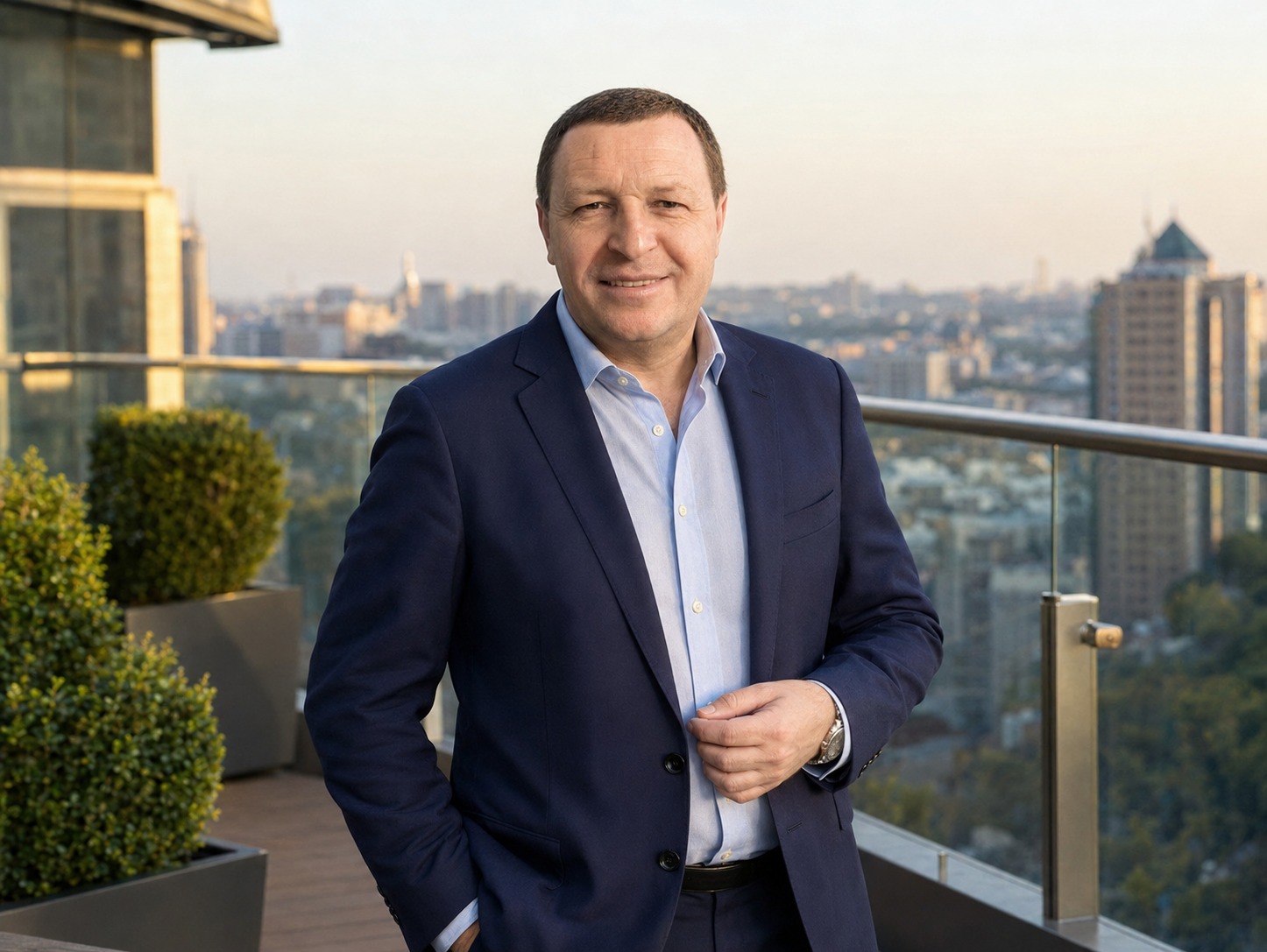
The reconstruction of Ukraine has already become one of the biggest challenges for the state and local self-government. We need to restore homes, roads, schools, hospitals, businesses and public spaces. But alongside questions of funding, construction timelines and architectural solutions there is another, no less important one: people's safety.
In my view, safety should become one of the main quality criteria of post-war reconstruction. We have a chance not just to give cities back their former appearance but to make them more convenient, more accessible and better protected against modern threats. It is important not to lose this chance.
Safety does not begin with cameras and guards
When people talk about the safety of public space, they most often mention video surveillance, lighting, fences or guards. All of this may of course be necessary. But such measures do not always solve the main problem.
Imagine a new city square. It has a modern surface, attractive benches, greenery and lighting. Yet next to the place where many people gather there is heavy car traffic. Access for rescuers is difficult, the route to the shelter is unclear, and during evacuation the flows of people cross.
Formally the site may look complete. But can it be called safe? In my view, no. Safety has to be built in at the stage of planning the area — before the project is approved, procurement is carried out and money is spent on construction.
In international practice this approach is known as Security by Design. Its meaning is fairly simple: it is better to anticipate danger in advance than to spend extra money later fixing mistakes.
For example, properly located entrances, good visibility across the area, well-thought-out lighting and separation of vehicle and pedestrian flows can reduce risks even before any technical systems are installed. At the same time, a safe space must not turn into territory behind a high fence. People should feel free in it rather than live in an atmosphere of constant control.
The war has changed the requirements for the urban environment
Before the full-scale invasion, the safety of public spaces was mainly associated with crime, road traffic, fires, public order and emergencies. Today the list is much wider.
It is necessary to take into account missile and drone strikes, explosive objects, sabotage, terrorist threats, power outages, communication failures and the possibility of several dangerous events occurring at once.
What is distinctive about modern threats is that one problem can cause another. For example, a loss of electricity affects lighting and alerts. A lack of communication makes it harder to coordinate services. And badly organised routes can create a dangerous crowd during evacuation. So today it is not enough simply to provide a shelter or install an alert system — you need to understand how these solutions will work together.
Accessibility needs separate attention. A person in a wheelchair, a veteran with a mobility impairment, parents with a pushchair or an older person must have a real opportunity to move around the area safely and reach the shelter. Safety that is available only to a physically fit person cannot be considered complete.
Hostomel, Bucha and Irpin: reconstruction taking account of what was lived through
The question of safe reconstruction is of particular importance for communities that have lived through combat. Hostomel, Bucha and Irpin are telling examples of areas where rebuilding infrastructure must be combined with new approaches to protecting people. These communities share the experience of war but differ in the layout of their territories, transport infrastructure, density of development and the character of their public spaces. That is why identical solutions for all sites will not work here.
For a city park, for instance, it is important to assess lighting, visibility of routes, accessibility of exits, the possibility of access for emergency services and visitors' behaviour in danger. For a transport hub the priorities will be traffic organisation, preventing dangerous crowding, safe crossings and clear navigation. For a memorial space where mass events may take place, one must additionally consider the nature of visits, management of crowd flows, access for rescue services and response to emergencies. And the area around a school, hospital or administrative building will have its own features and need a separate assessment.
The main thing is that the community should know which risks exist on its territory, who is responsible for reducing them and what must be done first.
Why the state needs a single safety policy
Ukraine already has a considerable number of regulatory documents governing construction, civil protection, fire safety, landscaping, road traffic and accessibility of facilities. The problem is not so much a lack of rules as that they are often applied separately.
The architect is responsible for design, the builder for the work, the relevant services for meeting special requirements, and local authorities for organising reconstruction and subsequent maintenance. But who checks how far all these decisions together actually ensure a person's safety?
I have proposed a new model that combines the international principles of CPTED (crime prevention through environmental design) with civil protection, countering deliberate threats, accessibility and infrastructure resilience. It is a clear order of work: first we assess the risks, then take them into account in the design, determine the necessary measures, secure funding, check the result and maintain safety after the facility opens.
At the national level, common approaches and minimum requirements must be defined. At the regional level, coordination and methodological support must be provided. And the territorial community must be responsible for specific decisions and their implementation. Such a division will avoid a situation in which a facility is formally put into operation but nobody is responsible for its actual safety.
A security audit must become part of reconstruction
One of the most common mistakes is to start by buying equipment without understanding the real risks. You can install dozens of cameras but fail to ensure a proper response to an incident. You can buy an alert system but not provide for it to work without power. You can equip an area with protective elements but create obstacles for people with disabilities or for rescuers.
That is why, before reconstructing or creating an important public space, it makes sense to conduct a security audit. For some sites a professional inspection against a single checklist is enough; large or sensitive spaces need an in-depth assessment. It is important to establish who will use the area, what dangers are possible, how people will receive warnings, where they will move in an emergency, whether rescuers will be able to work and who will be responsible for the site once construction is complete.
A useful tool could be a safety passport for the public space — a document with information on the main risks, responsible persons, available protective measures, response procedure, the state of systems and the dates of the next checks. Such a document should be a working tool, not a folder opened only before an inspection.
Building is not enough. The system has to be kept working
Another problem of reconstruction is funding only the construction itself or the purchase of equipment. A community gets a modern video surveillance or alert system, but after some time it turns out there is no money for maintenance, communication fees, replacing equipment or training staff. In that case even an expensive solution gradually loses its effectiveness.
That is why the cost of safety should be calculated for the whole period of operation, not just the moment of purchase. You need trained people, clear instructions, periodic drills, testing of backup modes and analysis of mistakes after emergencies. It matters more to know whether critical shortcomings have been fixed, whether evacuation routes are accessible, whether systems work without electricity and whether the responsible persons are ready to act in a crisis — than simply to count the number of cameras installed.
What can be done today
Territorial communities do not need to wait for the war to end or for a large state programme to appear in order to start putting safety in order. The first step should be to designate a responsible person or unit to coordinate the safety of public spaces. Next, they need to take inventory of facilities, identify the most important locations and assess the main risks.
After that it makes sense to choose several spaces with different purposes and test the proposed approach on them — this is how to work out, step by step, the audit methodology, the procedure for cooperation between services, design requirements, terms of reference and rules for subsequent maintenance. At the same time, each community must take into account its own risks, budget possibilities and residents' needs. The best result will come not from installing equipment at all sites at once but from consistent work, moving from the most dangerous and important spaces to other areas.
Reconstruction must be safe for people
Today Ukraine is paying an extraordinarily high price for the right to its own future. So we cannot afford to repeat the mistakes of the past when rebuilding cities and communities. New roads, buildings, parks and squares must meet not only architectural requirements — they must take into account the real threats our country has already lived through.
For me, safety is not the number of guards, cameras or fences installed. It is a system that helps prevent danger, reduce the consequences of events and protect people's lives. This is the approach that needs to be built gradually into the state policy of Ukraine's reconstruction.
We must build not simply new cities in place of destroyed ones. We must create spaces in which people can live, work, relax and raise children in peace and feel protected. That is why safety must be not an optional extra of post-war reconstruction but one of its mandatory principles.
Ruslan Papenko, corporate security specialist
Source: UkrPress.fun