
From service to a new role: how EuroBudExpo-2026 searched for a systemic model of veteran employment
There are already plenty of programmes and courses for veterans in Ukraine — what is missing is a single path from the end of service to a new professional role. How the state, employment centres, veterans' spaces, education and business are building it was discussed at the panel “Human Capital of Reconstruction: Veterans, Business, State” at EuroBudExpo-2026.
14 October 2026
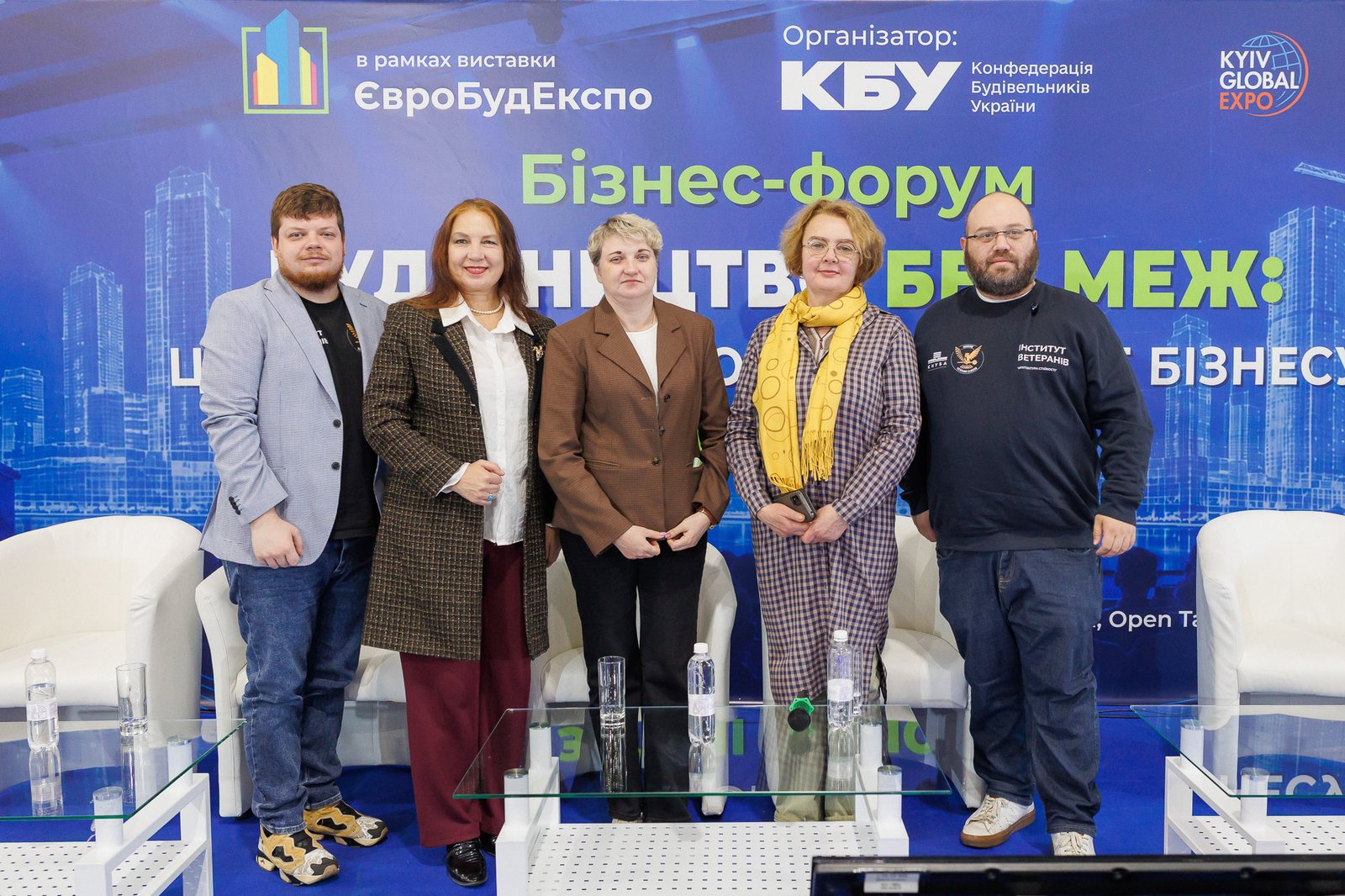
Ukraine already has plenty of programmes, courses and initiatives for veterans. What is missing is something else: a single path that joins them into a system a person can understand — from the end of service to a new professional role. This was exactly what was discussed on 14 October at the EuroBudExpo 2026 exhibition. The discussion panel “Human Capital of Reconstruction: Veterans, Business, State” was organised by the Confederation of Builders of Ukraine and the KNUCA Veterans Institute “Architecture of Resilience”. The Veterans Cluster of Ukraine was the partner.
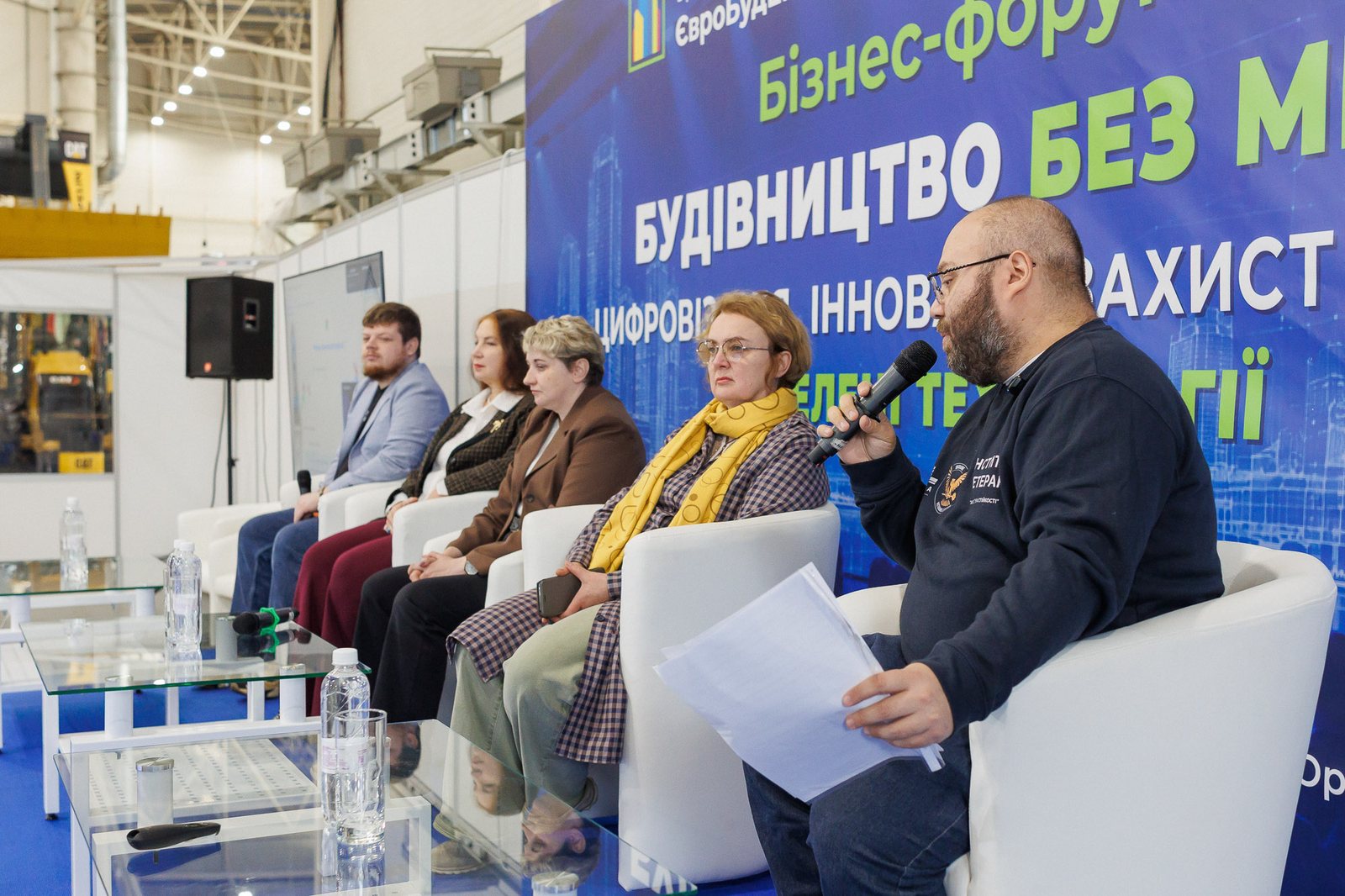
The conversation involved representatives of the parties who are paving this path:
- Olena Bratytsia, head of the Department of Veterans' Education and Business at the Ministry of Veterans Affairs
- Tetiana Hovorun, head of the service delivery management department of the Kyiv City Employment Centre
- Liudmyla Cherkashyna, deputy head of Kyiv Military Hub
- Artem Honcharenko, head of the KNUCA Veterans Institute
- Olena Kreknina, deputy marketing director of AXOR Industry
The moderator was Yevhen Komarov, deputy head of the KNUCA Veterans Institute. Opening the conversation, he outlined what he expected from the panel: that listeners — both veterans and business — would take away concrete points and knowledge about existing programmes. And if at least one person finds a job after the discussion, that will already be a success.
Training is a tool, not the goal
Olena Bratytsia recalled that the professional development of male and female veterans is much more than courses. It is adaptation to civilian life, economic independence and effective use of human capital. The problem is that this experience is not always clear to a civilian employer: a military specialty rarely has a direct equivalent in civilian classifiers, and the competences acquired are often not confirmed by anything.
In her words, the answer should be two mechanisms. The first is the state programme of professional adaptation under government resolution No. 432: vocational training, retraining, upskilling or a second specialty. Training can be in person, remote or dual, and one can apply for the service either to the structural unit for veterans policy or to an employment centre.
The second mechanism is confirming qualifications without repeat training through qualification centres, which assess not where a person studied but what they can actually do. Both routes are covered by state funds, so training, Olena Bratytsia stressed, should be guided by the current needs of the labour market. The state's task is to move from fragmentary educational opportunities to a coherent system of professional fulfilment.
The employment centre: start with the person, not the vacancy
Tetiana Hovorun said that the employment service works with veterans not only as with unemployed people: training, retraining and upskilling are available also to those without unemployed status. But on the eve of the panel the resolution on referral to training changed: according to her, a voucher now requires a letter of recommendation from an employer. The company must confirm that it needs a specialist and commit to employing them afterwards.
Tetiana Hovorun put the main emphasis on the approach: the conversation must begin with the person, not with an offer of a vacancy or a course. Many veterans are not yet ready to look for work — psychologically or physically — and that is normal. The specialists' task is to analyse together with the person what they can do and to find where those skills will be useful. Training should be chosen only when the end result is visible — a real employer ready to take the worker on. And here, Tetiana Hovorun stressed, neither the employment centre nor the support specialists can cope on their own: synergy is needed.
Veterans' spaces: a veteran is not a “special category”
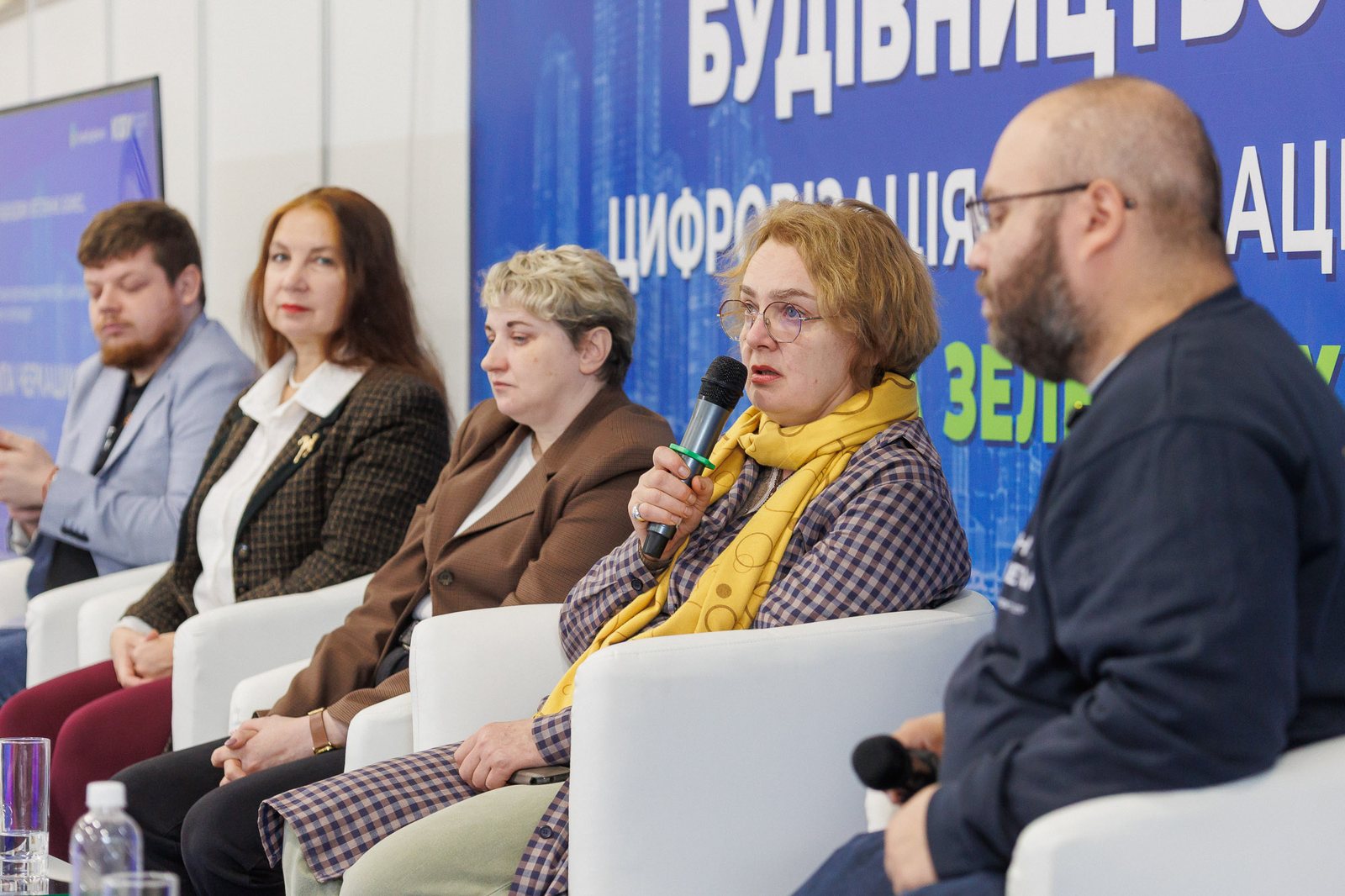
Liudmyla Cherkashyna presented Kyiv Military Hub, the capital's municipal veterans' space. In her words, the services now offered to veterans should be the standard for anyone, and veterans themselves do not want to be counted among people in “particularly difficult life circumstances”. She called employment not the first step of adaptation: first a person needs to recover strength and health.
The Hub has memoranda with employers — from large corporations to small businesses. Veterans have access to a vacancy showcase in the city app “Kyiv Digital”, four consultation locations (two on each of the left and right banks), support specialists in every district, a hotline and microgrants for those planning their own business. The Hub also holds meetings for work teams on the specifics of communicating with veterans. Separately, Liudmyla Cherkashyna pointed to the need for support even after employment: some people change jobs quickly, and such support helps not to lose the result.
The Veterans Institute: how to join the state, business and the veteran community
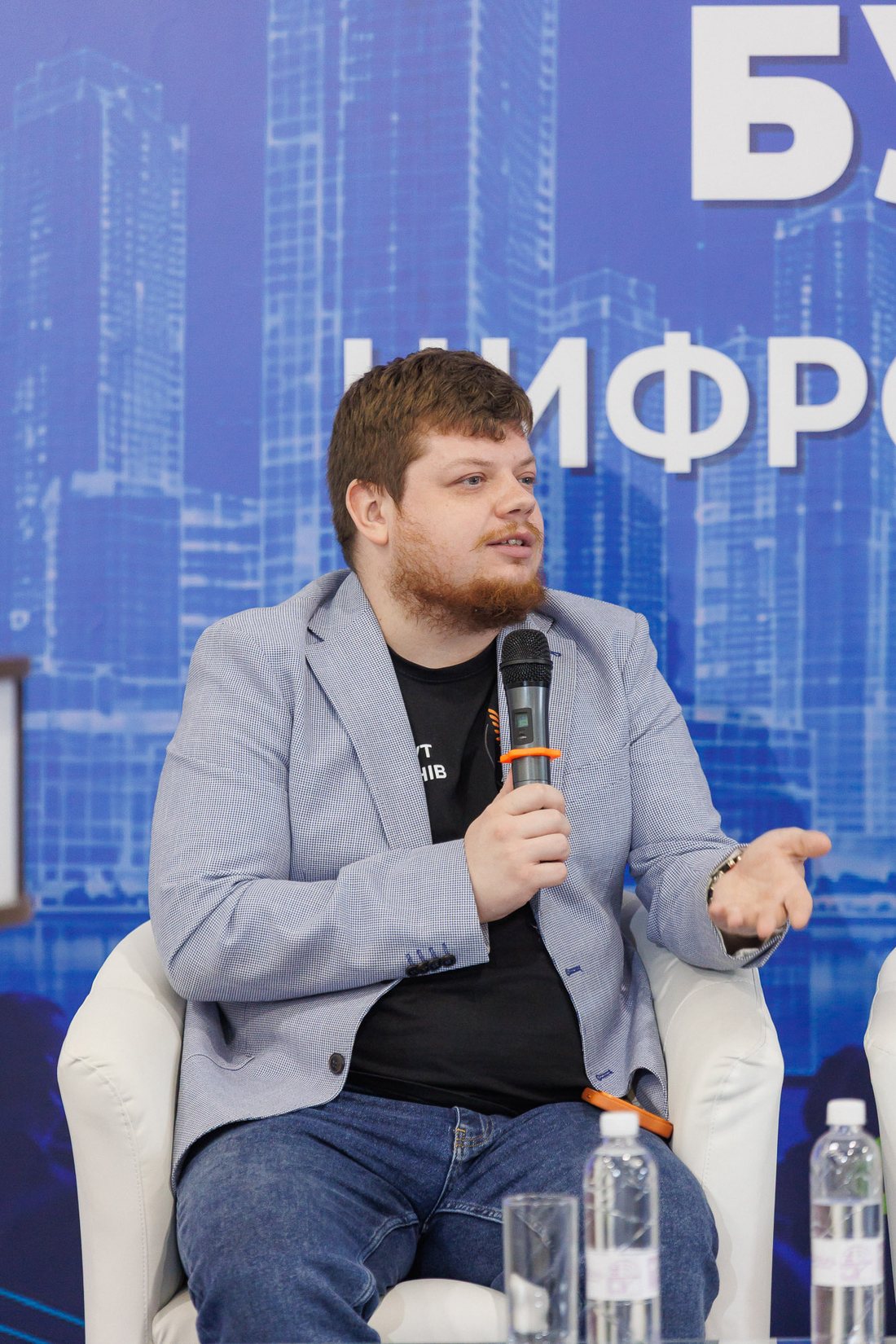
Artem Honcharenko, head of the KNUCA Veterans Institute
Artem Honcharenko, who heads the KNUCA Veterans Institute, compared work at the junction of three parties to crossing from one bank to another while tasks “fly in” from all sides at once. In his words, without a comprehensive approach, in which business helps sustain and strengthen the educational structure with practical solutions and personnel, systemic work is hard to do. At the same time, for partners and grant-makers the most valuable thing is long-term institutional stability: once the state has taken on obligations, the social investment made can be counted in concrete figures — how many people completed training and how many of them came into business.
He separately stressed an early start: the Institute begins education already during rehabilitation, so that a person returning from the front is not left alone with bureaucracy. For a veteran used to clarity in service, civilian procedures look like a labyrinth, so feedback is needed at the first stage — before the person becomes disillusioned and steps aside. Artem Honcharenko praised the work of support specialists, who in the field are often the first link and carry a considerable emotional load. As a practical example he mentioned the AI assistant the Institute has introduced for consultations: it has taken routine off part of the team and helps not to lose people's enquiries.
AXOR Industry: a business already working with veterans
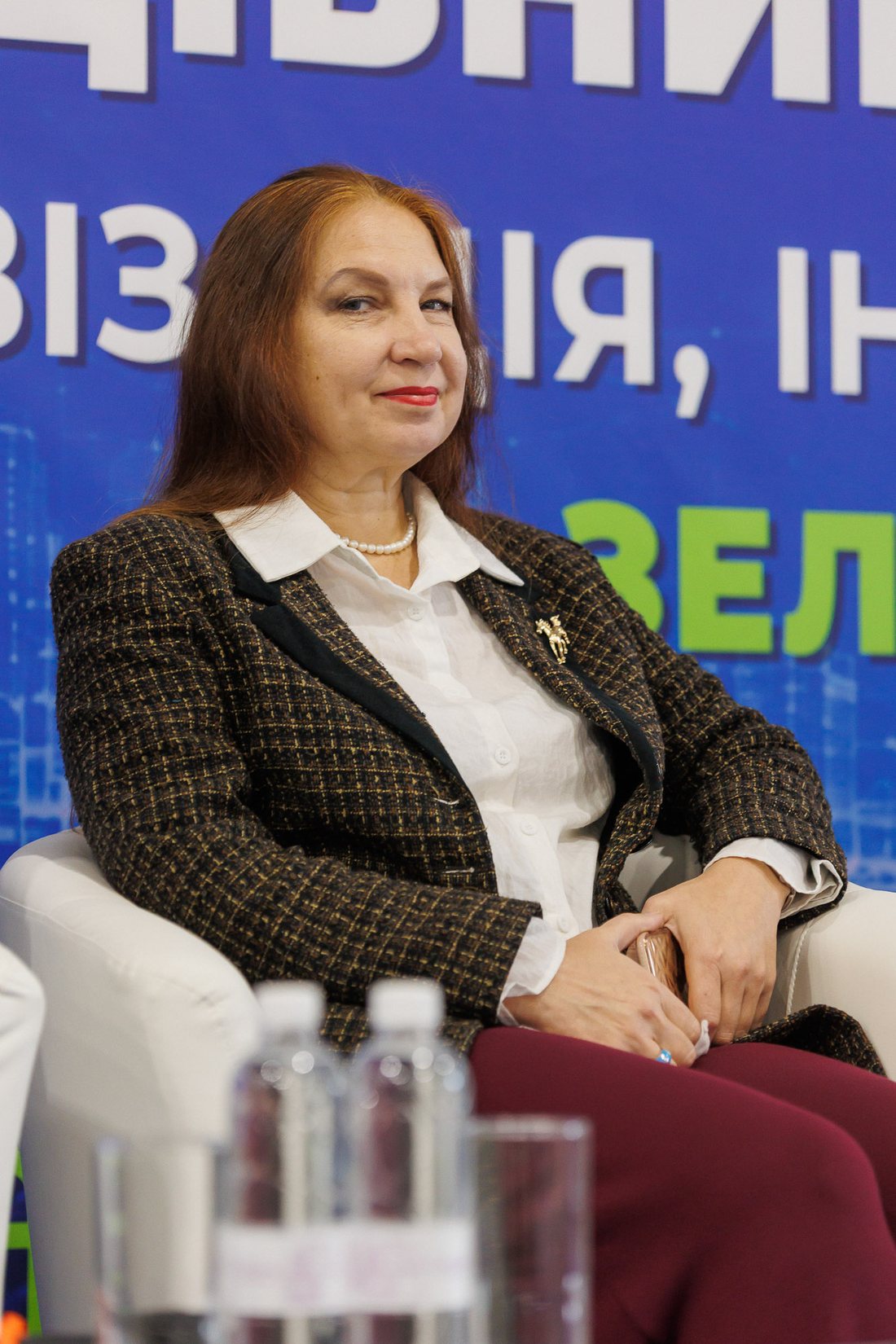
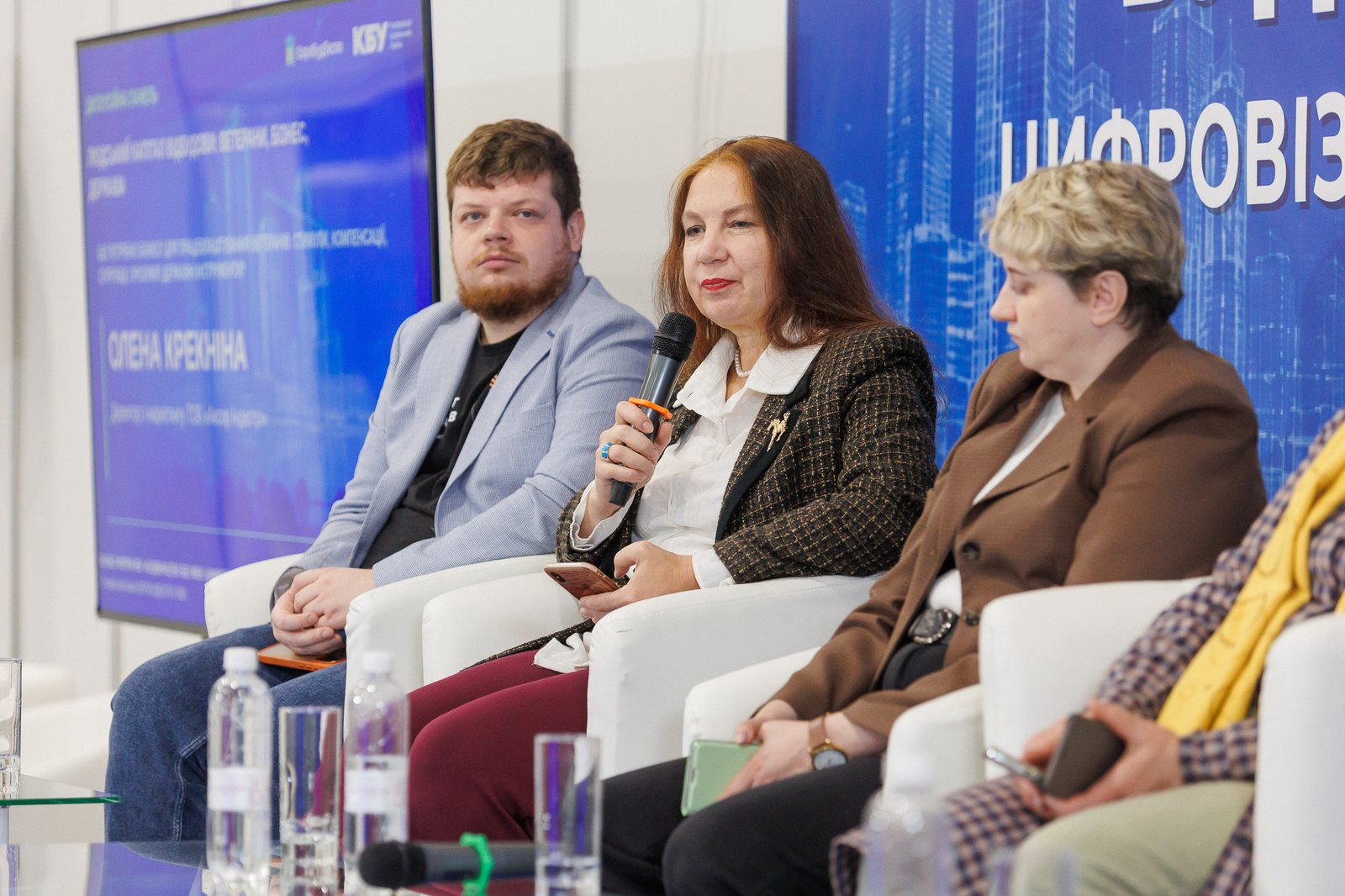
Olena Kreknina, deputy marketing director of AXOR Industry
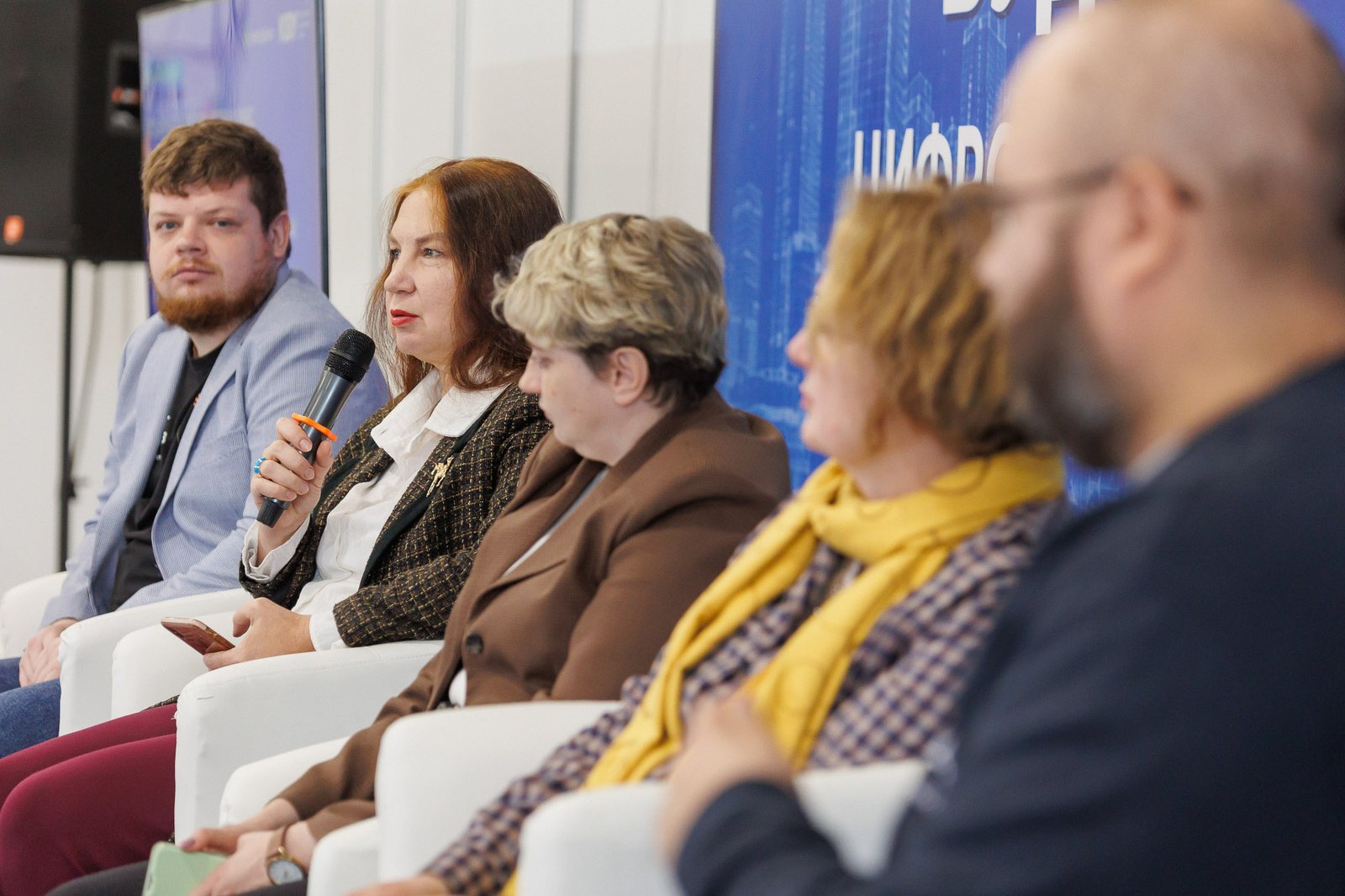
Olena Kreknina's speech drew particular attention from the audience. AXOR Industry makes window hardware, and the plant, in her words, was built from scratch in 2011 with accessibility principles in mind. That is why people with second- and third-group disabilities and with hearing impairments have long worked here, and now veterans who were employees before mobilisation are also returning to the team. The company takes part in retraining programmes — for veterans and for young people alike — and is ready to share its experience in veterans' spaces: to run tours of production so that candidates can see the workplaces and judge whether they suit them.
Olena Kreknina gave a detail from life that shows why flexibility matters. One colleague returned to work at the press after being wounded, but it turned out that the noise was too hard for him to bear. The company did not end the relationship but offered another position: the person knows the team, and the team knows him. A separate line of care is employees who are serving now. In her words, the company supports them so that they feel the company is waiting for them. When veterans come home on leave, they always visit the plant.
Moderator Yevhen Komarov added that AXOR also has cases of remote work for people undergoing rehabilitation, including abroad. While abroad they were brand ambassadors and presented the brand at various events.
The most important thing — what, in Olena Kreknina's view, business lacks now:
- A support specialist at every company. Adaptation is needed not only by the veteran but also by the team that receives him. Large companies with thousands of employees have such a person, but at a company of around 400 staff it is an extra function of marketing. Here, she stressed, state help is needed.
- A clear procedure for compensation and reporting. Business needs a simple set of documents and clear rules by which it can obtain compensation and then account for every kopeck.
- Respect for the veteran as an ordinary colleague. People do not want to be singled out, and at the same time do not always know about state opportunities. So it is important that support be unobtrusive and information accessible.
What was agreed
Summing up the conversation, participants agreed on several points:
- a conversation about work should begin with the person, not the vacancy
- business needs to understand how to adapt the workplace and what position it can realistically offer
- neither the employment centre nor the support services can cope alone — synergy is needed between the state, the community, business and veteran communities
- business should have a single, clear point of information on compensation, employment and support
Moderator Yevhen Komarov urged everyone who listened to take concrete opportunities away from the discussion — for veterans, for employers and for the support specialists themselves — and thanked the Confederation of Builders of Ukraine for the venue. According to the organisers, the aim of the panel was not an exchange of opinions but concrete solutions and pilot projects in the construction sector that can start being implemented this year.
Details about the Veterans Institute's work — Instagram, Facebook, veterano.knuba.edu.ua.
AXOR INDUSTRY — Instagram, Facebook, axorindustry.com.